Mental health: chest pain—when stress mimics a heart problem?
Hi, it’s Angelica. Chest pain can be related to stress, but it is impossible to attribute it to anxiety without ruling out a physical cause. If it is severe, new, or accompanied by feeling unwell, call 15 or 112: this is a medical emergency. Stress can cause palpitations, rapid breathing, and muscle tension, sometimes with a feeling of tightness. These symptoms can be alarming, but their appearance alone is not enough to identify their cause. The priority is to keep yourself safe and seek medical advice if you are unsure.
What to do right away:
- Stop what you are doing and sit in a comfortable position.
- Call 15 or 112 if the pain is severe, persists, comes back, or is accompanied by feeling unwell.
- Note when it started, how long it lasts, and any associated symptoms, without delaying an emergency call.
- Avoid exertion and do not drive if you feel weak or dizzy.
- If there are no emergency signs, make an appointment with a healthcare professional to discuss it.
Stress can make your heart beat faster and tighten your chest muscles, but cardiac symptoms can resemble one another and sometimes require an examination. To better understand chest pain related to stress and the precautions to take when your heart rate speeds up, also see this information about tachycardia and its possible causes.
Chest pain and stress: why the body reacts
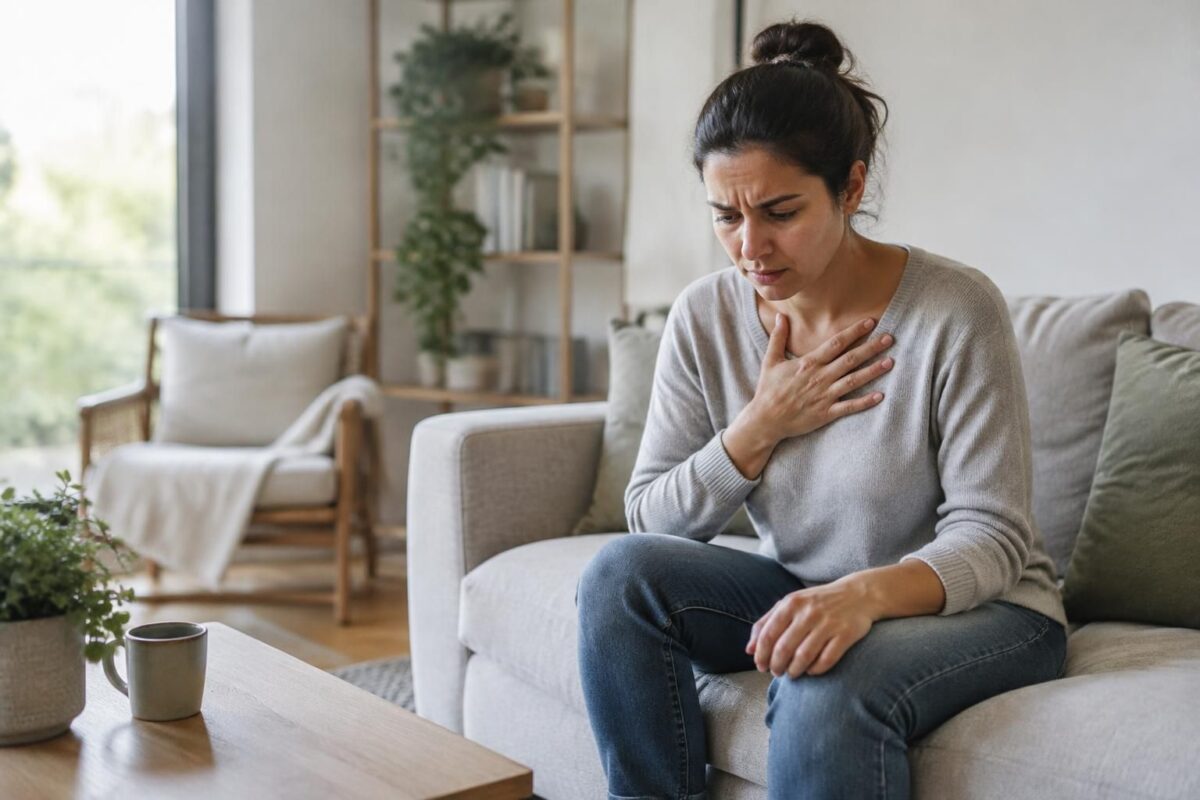
During periods of stress, the body prepares to react. Adrenaline can speed up your heart rate, while your muscles contract and your breathing sometimes becomes faster or more shallow. This can cause tightness, discomfort in your chest, or palpitations.
A panic attack can intensify these sensations: fear of feeling unwell increases anxiety, which makes physical sensations feel even more pronounced. However, stress is not the only possible explanation. New or unusual chest pain deserves an appropriate evaluation.
Sensations vary from person to person
The discomfort may occur during a stressful period, after an argument, or while resting, and may be accompanied by trembling or rapid breathing. But neither the emotional context nor the type of pain alone can rule out a heart problem or another physical cause.
Once, Lina felt her heart racing before an important exam and feared she had a heart problem. She asked a professional for advice, and they assessed her symptoms instead of immediately attributing them to stress.
Stress-related pain or cardiac symptoms: what to do
Some signs may point to a stress response, but they do not constitute a diagnosis. The pain may also come from the heart, lungs, digestive system, or muscles. If in doubt, it is better to seek advice promptly than to try to decide on your own.
| What you notice | What it may suggest | The cautious response |
|---|---|---|
| Palpitations after a strong emotion, rapid breathing | A stress response is possible, but not certain | Note the circumstances and seek advice if it happens again |
| Severe, persistent, or recurring pain | Several causes are possible, including a physical cause | Call 15 or 112 if it is severe or concerning |
| Pain with marked shortness of breath, sweating, nausea, weakness, or feeling unwell | Symptoms that require urgent attention | Call emergency services immediately |
| Recurring chest discomfort or discomfort associated with exertion | A medical evaluation is needed | Contact a healthcare professional promptly |
If the discomfort occurs with a spike in anxiety and eases as the emotion subsides, stress may play a role. If it is new, severe, persistent, or accompanied by feeling unwell, call emergency services without waiting.
“When in doubt, it is better to get it checked than to make assumptions.” This simple rule helps prevent you from dismissing pain that needs medical attention.
What should you do after a medical emergency has been ruled out?
Once urgent signs have been addressed and physical causes have been evaluated, simple steps may help you manage stress better. They do not replace a medical examination and should not delay emergency services if your symptoms get worse.
- Step 1: observe. Note when the discomfort starts, how long it lasts, and what accompanies it. This information will help the professional understand the situation.
- Step 2: slow down gently. If you are safe and there are no emergency signs, relax your shoulders and breathe slowly, without forcing it or holding your breath.
- Step 3: arrange follow-up care. Talk to a doctor about the episodes. If anxiety occurs often, psychological support can help your mental health and stress management.
Cutting back on coffee, tobacco, and alcohol may also help if you notice that they make your palpitations worse. Regular sleep and appropriate physical activity support overall well-being, but they are not treatments for unexplained chest pain.
Habits that help without replacing care
Slow breathing, muscle relaxation, or cognitive behavioral therapy can help some people cope with anxiety. The effects vary from person to person: there is no one-size-fits-all method, and a professional can help you choose an appropriate approach.
Avoid taking supplements or calming products without checking with a professional that they are compatible with your medications. Natural does not always mean risk-free.
When to seek help for recurring pain
If the episodes come back, become more frequent, or disrupt your daily life, make an appointment to discuss them. Depending on your symptoms and health, the doctor may suggest a clinical examination and, if necessary, an electrocardiogram or other tests.
Chest pain should not be dismissed as an anxiety problem, even when it occurs during a difficult period. Having your symptoms assessed, then addressing stress if that seems relevant, allows you to move forward more safely.
Today’s action: Make a note of any episode of chest discomfort and seek medical advice if it happens again or worries you.
Can stress cause chest pain?
Yes, stress can cause muscle tension, rapid breathing, and palpitations that lead to chest discomfort. But you should not conclude that the pain is due to stress without considering other possible causes.
How can you tell if chest pain is cardiac?
Sensations alone cannot determine this. Severe, persistent pain, or pain accompanied by shortness of breath, sweating, weakness, or feeling unwell, warrants calling 15 or 112.
What should you do if the pain comes back during a period of anxiety?
Note the circumstances and make an appointment with a healthcare professional, especially if the episodes recur. If the pain becomes severe or is accompanied by concerning signs, call emergency services immediately.
Can breathing calm stress-related pain?
Slow, comfortable breathing may help ease anxiety for some people, but it cannot identify the cause of the pain and never replaces a medical evaluation.
Thanks for your interest; Angelica