Nutrition and Health: Hemochromatosis—Which iron-rich foods should you watch?
Hi, it’s Angelica. If you have hemochromatosis, pay particular attention to organ meats, red meat, certain seafood, and iron-fortified foods, without cutting out all nutritious foods. The most helpful approach is to limit highly concentrated sources and check labels, with your doctor’s guidance. Diet can support your care, but it doesn’t replace treatment.
Things to do right away:
- Look for breakfast cereals and other products labeled “iron-fortified.”
- Eat organ meats and large portions of red meat less often.
- Don’t take an iron-containing supplement without medical advice.
- Avoid high doses of vitamin C in tablet form with an iron-rich meal.
- Talk to your doctor about your alcohol consumption, especially if you have liver disease.
To plan your diet more effectively, you can also check out these tips on a low-iron diet and this practical guide to food choices when you have hemochromatosis.
Hemochromatosis: which iron-rich foods should you limit?
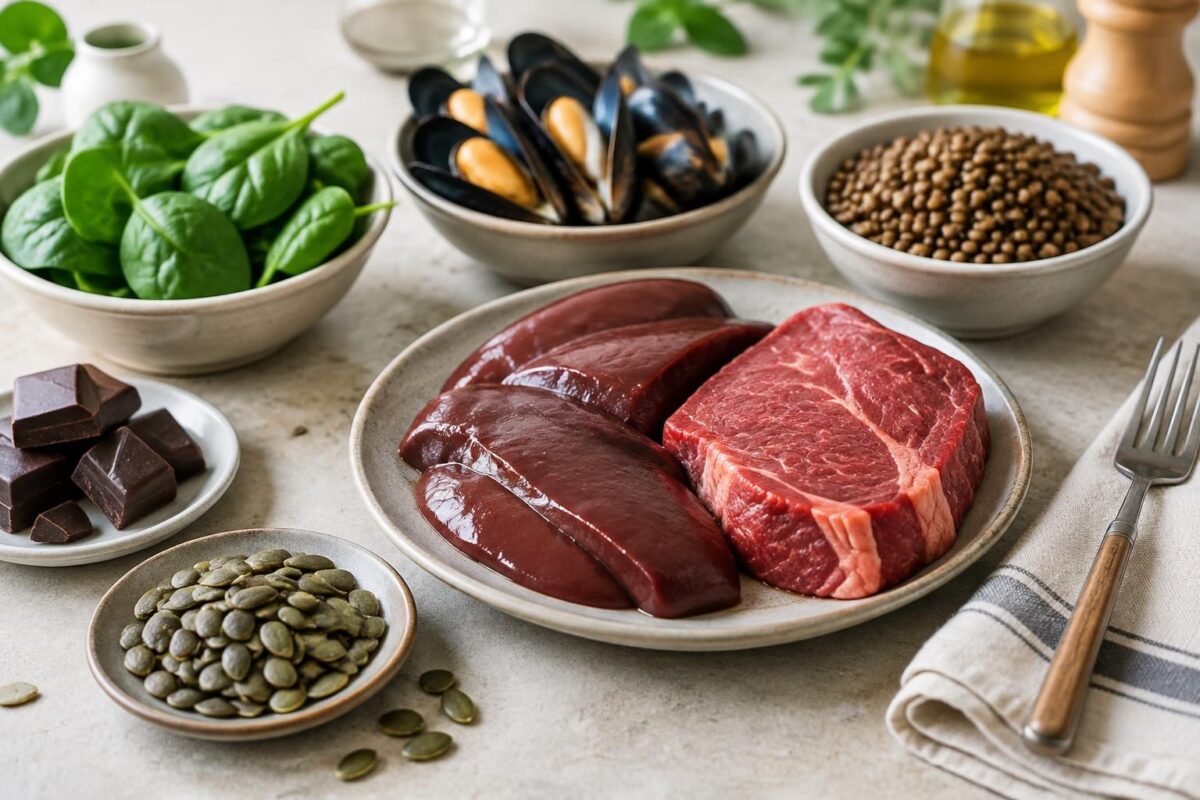
Organ meats, such as liver and blood sausage, are among the foods with the highest iron content. Red meat also provides iron in a form that the body generally absorbs more easily than iron from plant foods.
Clams, mussels, and oysters can also be high in iron. If you have hemochromatosis, especially avoid eating them often or in large amounts; ask the team monitoring your test results for advice.
Also check the labels on breakfast cereals, powdered drinks, and grain products: some are fortified with iron. A product labeled “whole grain” or “plant-based” isn’t automatically low in iron.
Simple guidelines for making food choices
| Food or habit | Practical guideline | Keep in mind |
|---|---|---|
| Organ meats and blood sausage | Limit substantially | Very concentrated sources of iron |
| Red meat | Eat less often | Heme iron is readily absorbed |
| Seafood | Discuss based on your follow-up care | Some types, such as shellfish, are high in iron |
| Iron-fortified cereals | Look for it on the label | Compare products before buying |
| Tea, coffee, dairy products | May reduce absorption during a meal | They are not treatments |
Iron absorption: combinations that matter
Not all the iron in food enters the bloodstream. Vitamin C can increase the absorption of plant-based iron when consumed with the same meal. You generally don’t need to avoid fruits and vegetables: instead, aim for a varied diet and ask for advice before making major changes to your eating habits.
Tea and coffee contain polyphenols, while the calcium in dairy products can reduce iron absorption during a meal. You can take this into account when combining foods, but don’t rely on these foods to treat iron overload.
Be mindful of alcohol: it can increase the risk of liver problems, and the liver is particularly affected by hemochromatosis. If you have liver disease or abnormal test results, ask your doctor what you should do.
Three steps to adjust your diet without a strict diet plan
- Step 1: Take stock of your habits. Make a note of the organ meats, red meat, seafood, fortified products, and supplements you consume.
- Step 2: Choose a realistic change. For example, replace some red-meat meals with eggs, white meat, or another option recommended by your healthcare professional.
- Step 3: Share your changes with your doctor or a dietitian. Your test results, treatment, and health status determine which advice is right for you.
If you’re already taking an iron supplement, contact the healthcare professional who recommended it before making any changes. If you’re considering a supplement for fatigue, check its ingredients first and ask for medical advice.
Two situations to keep in mind
If you have confirmed hemochromatosis, follow your prescribed treatment: diet alone cannot remove iron that is already stored in your body. If your ferritin is high but you haven’t been diagnosed, don’t automatically conclude that you have iron overload; your doctor needs to interpret the result alongside other tests.
A simple example: Samir noticed while reading the label that his breakfast cereal was fortified with iron. He discussed it with his dietitian and adjusted his breakfast without cutting out fruit or overhauling his meals.
As a helpful saying goes: “Food supports treatment; it doesn’t replace it.” Iron overload may require medical treatment, often blood draws depending on the situation; only your healthcare team can determine the appropriate approach.
Useful questions about hemochromatosis and dietary iron
Do I need to cut out all iron-rich foods?
No. Drastic restrictions are generally unnecessary and can make your diet unbalanced. Focus on limiting highly concentrated sources and follow the advice of your healthcare team.
Should I avoid fruits and vegetables because of vitamin C?
Generally, no. Fruits and vegetables remain important parts of a balanced diet. Ask for advice about supplements or high doses of vitamin C taken with an iron-rich meal.
Can tea or coffee treat hemochromatosis?
No. Their polyphenols may reduce some iron absorption during a meal, but they don’t replace tests or prescribed treatment.
Does high ferritin always mean iron overload?
No. Ferritin can increase for different reasons. A healthcare professional needs to interpret this result alongside other test results and your medical circumstances.
Today’s action: Check the label of a product you consume often and note any mention of iron fortification.
Thanks for your interest;Angelica