
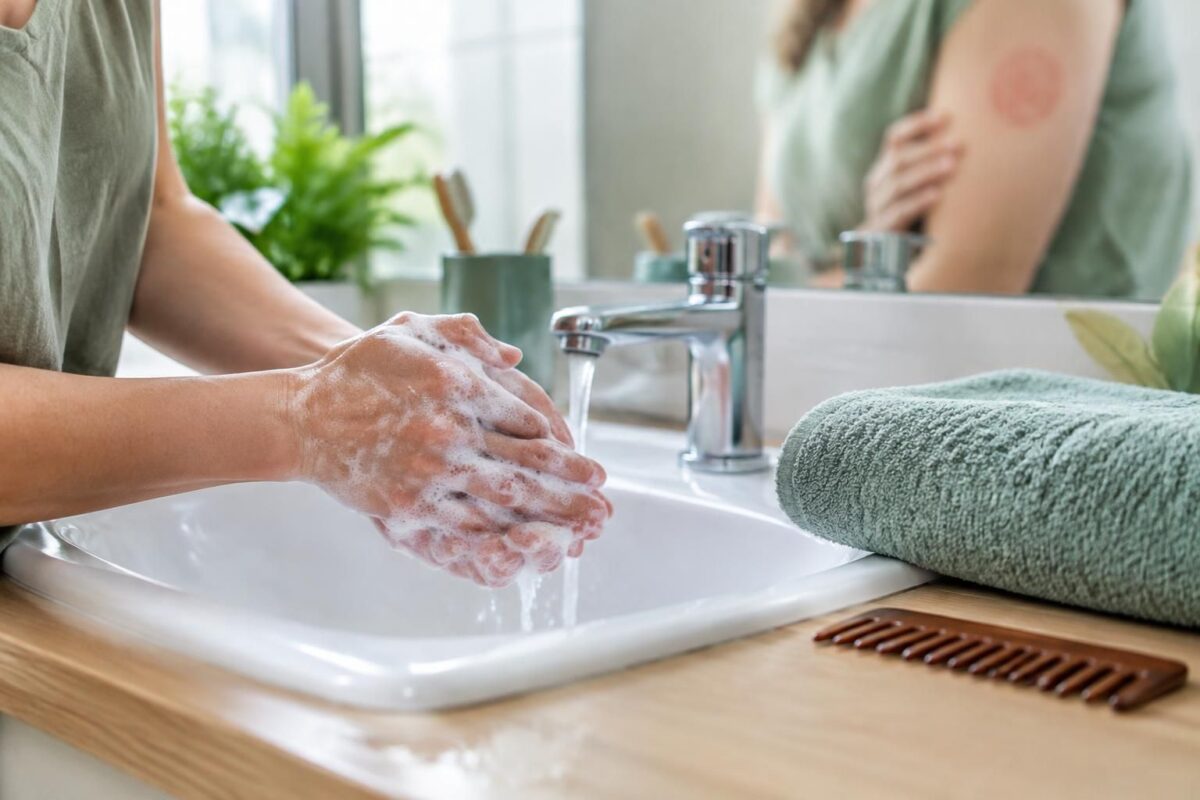
Natural Care: Ringworm—what steps really prevent it from spreading?
Hi, it’s Angelica. To prevent ringworm from spreading, wash your hands, don’t share towels or brushes, clean the items you use, and have a healthcare professional confirm the diagnosis. This fungal infection is contagious, but simple steps can limit transmission at home. Natural remedies are no substitute for appropriate antifungal treatment, especially if the scalp is affected.
What to do right away:
- Gently wash the affected area, then dry it thoroughly without rubbing.
- Wash your hands after any contact with the lesion or affected hair.
- Keep personal laundry and towels, clothing, and hair accessories separate.
- Wash textiles according to their care labels and clean shared items.
- Make an appointment with a doctor; also contact a veterinarian if an animal has patches or areas without fur.
Contagious ringworm can spread through direct contact, but also through contaminated objects. To understand the care and hygiene measures to follow, see these prevention tips from HUG and this guide to ringworm treatment.
Ringworm prevention: steps that really limit transmission
Preventing ringworm mainly involves keeping personal belongings separate, washing your hands, and regularly cleaning items that come into contact with the skin or hair. These steps to prevent contagion are useful throughout treatment, because transmission can come from a person, an animal, or an object.
Don’t share brushes, combs, hats, clothing, towels, or bedding. To disinfect surfaces and accessories, first clean off any visible dirt, then follow the instructions for the product you’re using; wash laundry at the temperature permitted by its care label.
| Item or situation | Helpful step |
|---|---|
| Towels, sheets, clothing | Keep them separate and wash them according to the textile care instructions. |
| Brushes and combs | Don’t share them; clean them thoroughly. |
| Bathroom surfaces | Regularly clean frequently touched areas. |
| Contact with the lesion | Avoid scratching, then wash your hands. |
“Treatment should be combined with hygiene measures.” This practical reminder from HUG sums up the goal: avoid re-exposure while the treatment takes effect.
Skin hygiene and laundry: avoid common mistakes
Keep your skin clean and dry, especially after a shower or physical activity. Use a clean towel every time and avoid covering a damp area with tight clothing.
A simple example: after noticing a suspicious patch on a child, a family set aside the child’s brush and towel, then sought medical advice. This small change helps prevent items from being passed from one person to another.
Antifungal treatment: why home remedies aren’t always enough
An itchy, round patch may suggest ringworm, but other skin conditions can look similar. A healthcare professional can confirm the cause and choose an appropriate antifungal treatment for the affected area; scalp ringworm often requires specific medical care.
Tea Tree and other essential oils are sometimes presented as natural solutions. Their effectiveness and safety are not guaranteed in every situation: they can irritate the skin, cause an allergic reaction, and should not delay diagnosis, particularly in children, during pregnancy, or when the scalp is affected.
If it’s a small patch on the skin, ask a doctor or pharmacist for advice to confirm the diagnosis and the appropriate treatment. If the scalp is affected, if several patches appear, or if a child is affected, make an appointment with a doctor promptly.
Three simple steps to act without spreading ringworm
- Step 1: Avoid close contact involving the affected area and don’t share any personal items.
- Step 2: Arrange a medical consultation and follow the prescribed treatment for the full recommended duration.
- Step 3: Continue washing your hands and cleaning the relevant textiles and accessories throughout treatment.
Don’t apply vinegar, essential oil, or a homemade paste to a lesion without professional advice. These products can irritate the skin and make it harder to assess the patch.
Screening animals and household members: identify a possible source
Transmission can also come from an animal, sometimes before any obvious signs appear. If a cat, dog, or other animal has hairless patches or abnormal skin, ask a veterinarian about screening the animal and avoid letting it share brushes or bedding with other animals.
Let the people who share your home know, without causing alarm. They can watch for symptoms and seek advice if they have concerns; an examination is also useful if several household members are affected.
Today’s action: set aside shared towels and accessories, then make an appointment to have the lesion checked.
Frequently asked questions about the spread of ringworm
Can ringworm spread through objects?
Yes. In addition to direct contact, objects such as towels, brushes, clothing, or hats can contribute to transmission. Don’t share them, and clean them properly.
Should laundry be washed at 60°C?
Not necessarily. Follow the textile care label and use the highest temperature it can withstand. Keep the affected items separate and wash them thoroughly.
Can essential oils replace treatment?
No. They are no substitute for a diagnosis or appropriate antifungal treatment. They can irritate the skin and should be avoided without professional advice, especially for children.
When should I seek medical advice?
Seek medical advice as soon as ringworm is suspected, especially if the scalp is affected, several people are affected, or an animal may be the source of transmission.
Thank you for your interest; Angelica