Health & Nutrition: high blood pressure—is salt really the only culprit?
Hi, it’s Angelica. No, salt isn’t the only culprit: cut back on very salty foods without eliminating salt, and also make changes to your overall lifestyle. High blood pressure depends on several risk factors, including weight, physical activity, alcohol, the kidneys, and sometimes certain medications. The good news is that small changes to your diet can support your cardiovascular health without sacrificing flavor.
Do this right away:
- Taste your food before adding salt.
- Look out for cured meats, prepared meals, and very salty sauces.
- Use an herb, spice, or lemon to add flavor to a meal.
- Add fruit and vegetables to your diet, unless your healthcare provider has advised otherwise.
- Track your blood pressure as recommended by your healthcare professional.
A useful first step is to look beyond the salt shaker: a large share of the salt we consume comes from prepared products, while sodium may appear on the label under another name. To learn more, check out these tips on foods that can raise blood pressure and this approach to diet and sedentary behavior.
High blood pressure: why salt can raise blood pressure
Salt contains sodium. In excessive amounts, it promotes water retention: blood volume increases and blood pressure may rise. This effect varies from person to person, and is often more pronounced in people who already have high blood pressure, older adults, or people with kidney disease.
Consuming a lot of salt over time can also make blood pressure harder to control. Reducing your intake sensibly often helps, but it does not replace medical monitoring or prescribed treatment.
What target should you aim for without going overboard?
General guidelines recommend staying around 5 g of salt per day, or about one level teaspoon in total. Depending on your situation and your care team’s recommendations, a target of 5 to 6 g may be suggested. In France, average intake is often estimated at around 7 to 9 g per day, depending on the group and source.
Sodium and salt do not refer to the same amount: to convert, multiply the grams of sodium listed by 2.5. The key is to compare products with one another and identify the ones that regularly feature in your meals.
| Guideline | What it means | Practical tip |
|---|---|---|
| About 5 g of salt per day | General guideline for limiting intake | Remember to count the salt already present in foods |
| Sodium on the label | Amount of sodium, not directly the amount of salt | Multiply by 2.5 to get the salt equivalent |
| Processed products | Common source of hidden salt | Compare labels and vary your choices |
Reduce salt without eliminating it: finding the right balance
Sodium helps maintain fluid balance and supports the functioning of nerves and muscles. This does not mean you need to add salt to every meal, but a strictly salt-free diet should not be improvised. Your needs depend in part on your health and the medications you take.
“You should reduce your salt intake, but you shouldn’t eliminate it,” says family physician Dr. Amara Aladel. This distinction is especially important if you have kidney or heart failure, or if you take diuretics: get medical advice before making major changes to your intake.
Excessive restriction can contribute to an imbalance in blood sodium, but fatigue or dizziness can have many possible causes. If these symptoms occur, especially alongside confusion or feeling faint, contact a healthcare professional rather than changing your diet or medication on your own.
Potassium and your diet also play a role
Potassium, found in foods such as vegetables, fruit, and legumes, is part of a balanced diet and can contribute to an overall balance of nutrients. It does not neutralize salt or replace medical care. If you have kidney disease or take certain medications, significantly increasing potassium or using a salt substitute can be risky: ask for advice.
Salt isn’t the whole story. Sleep, physical activity, alcohol, tobacco, and weight can also affect blood pressure; effective prevention therefore relies on several realistic habits tailored to each person.
Where is salt hiding in everyday meals?
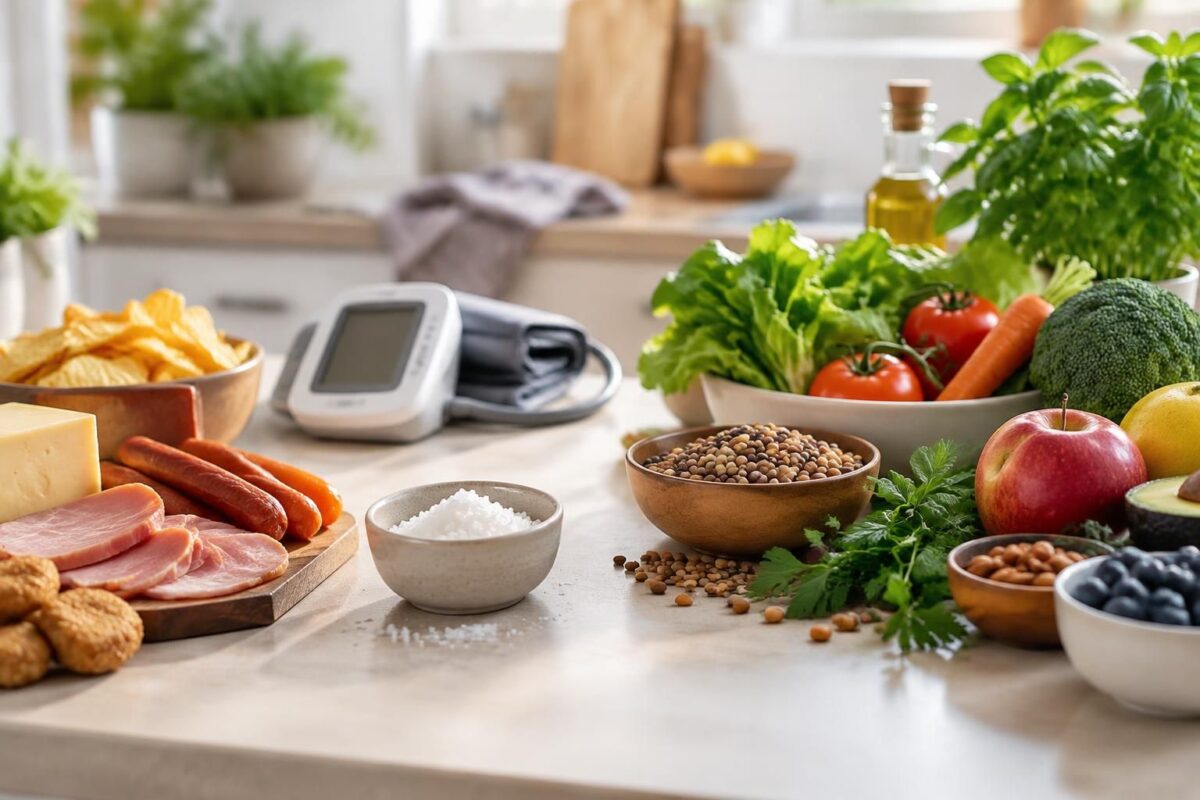
Bread, cured meats, some cheeses, prepared meals, boxed soups, sauces, and savory crackers can all contribute to your intake. Even if you hardly ever add salt at the table, these products can add up throughout the day.
A simple story: after comparing two store-bought soups, Lina chose the one with less salt and added flavor with pepper and lemon. She kept her usual meal, but found an easy way to reduce an intake she hadn’t noticed.
To add flavor, try garlic, onion, herbs, spices, vinegar, or lemon juice. Your palate often adapts gradually; it’s better to make changes step by step than to aim for bland food overnight.
Three steps to reduce your salt intake
- Step 1: For a few days, note the very salty foods you eat often, without trying to change everything at once.
- Step 2: Change one habit at a time: compare two products, rinse canned vegetables, or cook one more meal at home during the week.
- Step 3: Monitor your blood pressure as recommended and discuss the results with your doctor. Never change your blood pressure medication on your own.
If you often eat prepared meals, start by comparing their labels and regularly replace one of them. If you have kidney or heart disease, or take medication that affects sodium or potassium, ask for a personalized plan first.
What difference can reducing salt make to blood pressure?
For some people with high blood pressure, a moderate reduction in salt lowers blood pressure by a few millimeters of mercury. The size of the effect depends on salt sensitivity, starting habits, and other treatments, so you shouldn’t expect the same result for everyone.
Home monitoring can help you observe trends, as long as you follow the measurement instructions and record the results. A single reading is not enough to establish a diagnosis: if your readings are concerning or you have symptoms, seek medical advice.
Should you completely eliminate salt if you have high blood pressure?
Generally, no. It is better to reduce excess intake without adopting a strictly salt-free diet on your own. Ask your healthcare professional for personalized advice.
Which foods often contain hidden salt?
Bread, cured meats, some cheeses, prepared meals, sauces, and store-bought soups can all contribute to your intake. Read the labels and compare similar products.
Can potassium replace reducing salt?
No. Fruit, vegetables, and legumes can be part of a balanced diet, but potassium does not replace reducing excess sodium or taking prescribed treatment. Some health conditions and medications require precautions.
When should you ask for advice before reducing salt?
Ask for advice if you have kidney or heart disease, take diuretics, or are considering a major restriction. Do not change your treatment without your prescriber’s advice.
Today’s action: compare the labels of two products you often buy and choose the one with less salt.
Thank you for your interest;Angelica