Natural Care: Psoriasis—What Habits Can Help Calm Flare-Ups?
Hi, it’s Angelica. To calm psoriasis flare-ups, focus on regular moisturizing, gentle skincare, less stress, and following a treatment plan with a healthcare professional. Psoriasis is a chronic condition: habits can improve comfort, but they don’t replace prescribed care. Simple, repeated steps can help limit irritation and identify your triggers.
Things to do right now:
- Apply a fragrance-free emollient to dry areas, especially after washing.
- Take a short, lukewarm shower, then pat your skin dry.
- Avoid exfoliants and products that sting or dry out your plaques.
- Choose a relaxing activity, even a short walk or a few slow breaths.
- Keep a journal of skin changes, the products you use, and possible triggers.
These soothing habits are a good starting point, without trying to change everything at once. To explore complementary approaches, check out these tips on natural psoriasis care and these pointers for relieving a flare-up.
Psoriasis: start by protecting your skin
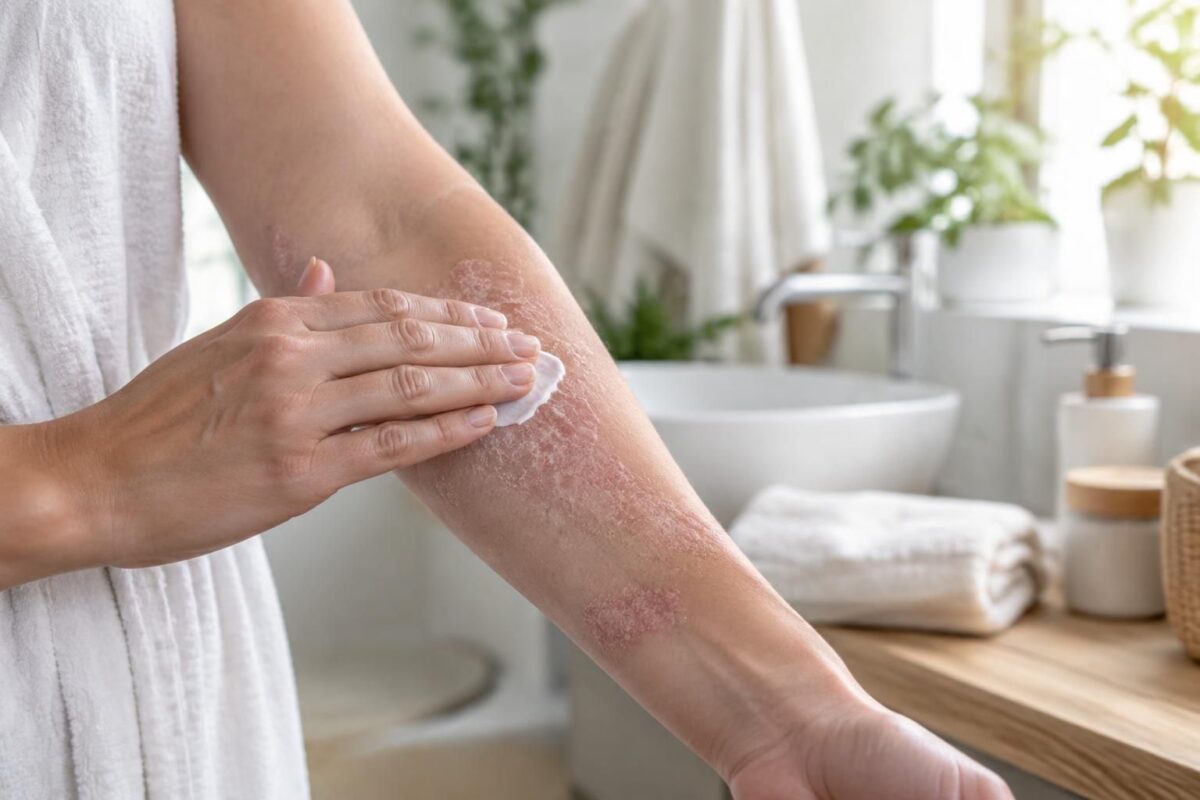
Dryness can worsen tightness and itching. Regularly moisturizing your skin with a simple, fragrance-free emollient helps support its protective barrier.
Choose a gentle cleanser and avoid scratching or picking off scales: these actions can irritate the area. Essential oils and “natural” products are not automatically suitable for reactive skin; try any new product cautiously and ask a professional for advice.
| Habit | Practical step | Keep in mind |
|---|---|---|
| Washing | Short, lukewarm shower; gentle cleanser | Avoid very hot water and rubbing |
| Moisturizing | Fragrance-free emollient after washing | Choose a texture that feels comfortable for you |
| Sun | Use suitable sun protection and get sun exposure cautiously | Sunburn can worsen plaques |
| Scalp | Gentle shampoo and careful handling | Ask for advice before using a medicated shampoo |
Sunlight is not a treatment to try on your own: too much exposure can cause a burn and worsen symptoms. If you’re considering phototherapy, talk to your dermatologist.
Balanced diet, stress, and sleep: everyday support
A balanced diet supports overall health, but no food cures psoriasis. You can choose varied meals with vegetables, fruit, legumes, and sources of omega-3s such as oily fish, while limiting alcohol and very sugary foods if that suits your needs.
Research on diet and inflammation, including studies in animals, points to possible avenues, but does not prove that a specific diet calms flare-ups in everyone. Avoid major dietary restrictions without medical or dietetic guidance.
Stress may coincide with worsening symptoms for some people. Stress management can include breathing exercises, a walk, yoga, or talking with someone close to you. Restorative sleep also supports overall well-being: a calming evening routine can be a realistic first step.
One evening, after a busy day, Sam noticed that a short walk helped them unwind, without making their plaques disappear. As this simple idea puts it: “Consistency matters more than perfection.”
Three steps to better manage psoriasis flare-ups
- Step 1: Look out for changes: itching, new plaques, dryness, or discomfort. Also note your skincare products, stress, sleep, and any changes in your habits.
- Step 2: Stick to a gentle, regular routine: cleanse without rubbing, apply an emollient, and protect irritated areas. Introduce just one new product at a time.
- Step 3: Check in with your doctor or dermatologist, especially if symptoms spread, become painful, or disrupt your daily life. Continue your prescribed treatment and don’t change it on your own.
If it’s a small dry area, start with a gentle emollient and monitor it. If the plaques spread or significantly interfere with your activities, make an appointment with a healthcare professional.
Smoking and alcohol can also harm your overall health, and smoking is associated with an increased risk of psoriasis. If you’d like to cut down or quit, a professional can help you choose an approach that works for you.
Don’t face psoriasis alone
Visible plaques can affect self-confidence, relationships, and intimacy. Talking to someone you trust or a healthcare provider can help lighten the load; you can also ask whether psychological support or a peer support group might suit you.
Persistent low mood, loss of interest, or significant changes in sleep or appetite should be taken seriously. A doctor or mental health professional can help you find support.
One final essential point: natural care is a complement, not a substitute for treatment. Flare-ups vary from person to person; triggers can be identified gradually, without blame.
Today’s action: apply an emollient after your next shower and note how your skin feels.
Can natural care cure psoriasis?
No. It can help keep your skin comfortable, but it does not cure psoriasis or replace treatment recommended by a healthcare professional.
Which product should I choose to moisturize psoriasis-prone skin?
A fragrance-free emollient suited to your skin is often a simple choice. If you have a reaction or are unsure, ask a doctor or pharmacist for advice.
Can the sun calm psoriasis flare-ups?
Light may improve symptoms for some people, but too much exposure and sunburn can worsen the skin. Protect yourself and ask for advice before using sunlight as a treatment approach.
When should I seek medical advice for psoriasis flare-ups?
Seek medical advice if the plaques spread, become painful, interfere with your daily life, or your treatment no longer seems suitable. Don’t change a prescribed treatment without medical advice.
Thank you for your interest;Angelica