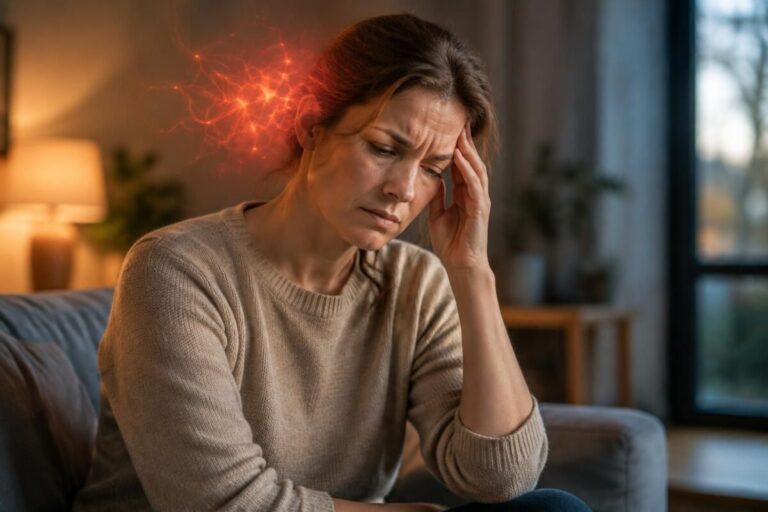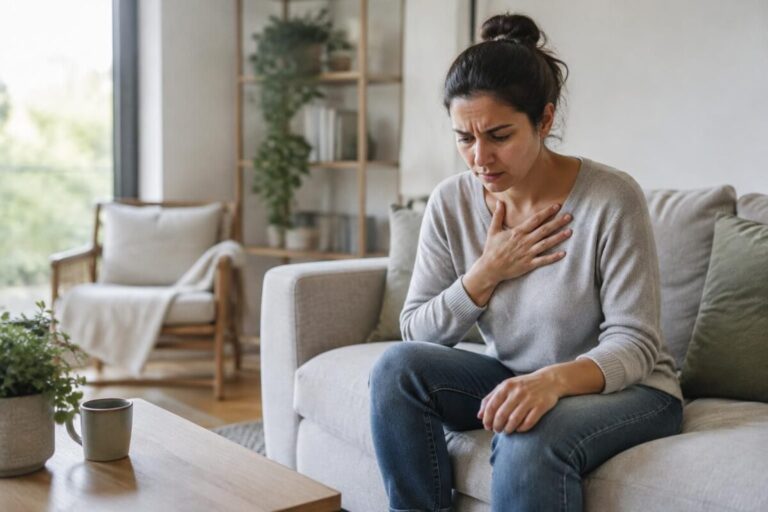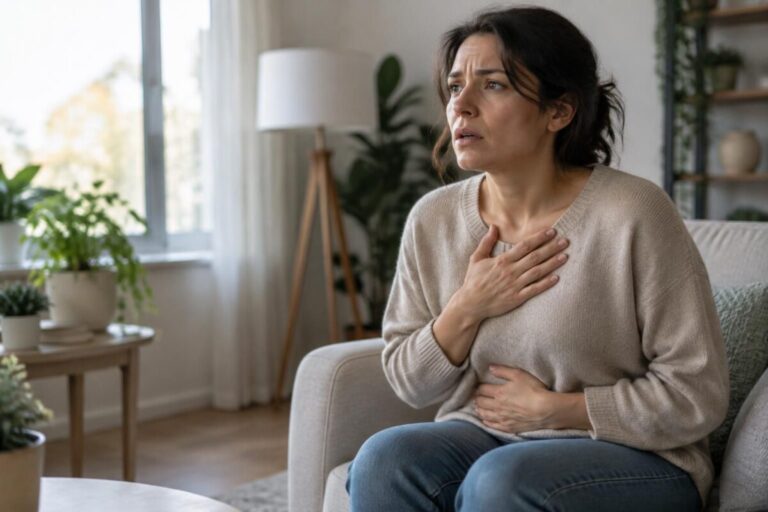

Mental health: chest tightness, how can you avoid mistaking fear for an emergency?
Hi, this is Angelika. New, severe chest tightness or chest tightness accompanied by worrying signs should be treated as an emergency, even if anxiety seems possible. Fear can cause real physical symptoms, but it cannot by itself rule out a heart problem. A few simple guidelines can help you respond without downplaying the situation or panicking.
What to do right away
- Call 15 or 112 if the pain is severe, persists, comes back, or is accompanied by feeling faint.
- Look out for associated signs: difficulty breathing, cold sweats, nausea, weakness, or loss of consciousness.
- If possible, sit down, avoid any exertion, and ask someone to stay with you.
- Do not drive yourself to the hospital if you have significant symptoms.
- Do not conclude that it is “just stress,” especially if this is the first time or the feeling is different from usual.
To better understand symptoms that can overlap, also explore these guidelines on stress-related chest pain and palpitations and anxiety.
Chest tightness: why fear can feel like an emergency
During a panic attack, the body goes into alert mode: the heart speeds up, the muscles tense, and breathing can become rapid or shallow. These reactions can cause pain, a feeling of tightness, or the sensation of being short of breath. The symptoms are real, even when stress is the cause.
But a panic attack and a heart problem can feel alike. It is therefore risky to make the call on your own based on a single sign, your age, or a previous episode. Feeling better after a few minutes of rest is also not enough to rule out an emergency.
Heart attack signs: symptoms that mean you need to act
Pressure or pain in the center of the chest that lasts several minutes or comes back may require urgent assessment. It may spread to an arm, the back, the neck, the jaw, or the upper abdomen.
Difficulty breathing, cold sweats, nausea, severe weakness, or feeling faint make the situation more urgent. Signs vary from person to person: if you are unsure and symptoms are sudden or severe, call emergency services rather than waiting to see what happens.
| What you notice | Prudent response |
|---|---|
| New, severe, or persistent chest tightness | Call 15 or 112, especially if it does not quickly ease. |
| Pain with shortness of breath, sweating, nausea, or feeling faint | Call emergency services immediately and follow their instructions. |
| A familiar feeling that has already been assessed, with no warning signs | Follow the advice you were given and contact a professional if the episode changes or recurs. |
This table can help you decide how to respond, but it cannot provide a diagnosis. If you are unsure, the right thing to do is seek medical advice.
Anxiety and chest tightness: recognizing an attack without putting yourself at risk
A panic attack can come on suddenly, sometimes when there is no immediate danger around you. A racing heart, trembling, tingling, and the feeling that you are suffocating are among the physical symptoms of stress. They can intensify fear, which in turn speeds up your breathing: a difficult cycle to break.
Imagine Camille, who feels tightness in her chest during a stressful day. Since she does not know whether this feeling is new, she does not try to reassure herself online: she checks for associated signs and calls a medical service for guidance. This response protects her mental health without putting her physical health at risk.
Managing anxiety: calm your body after checking for warning signs
If emergency services or a professional have ruled out an emergency and the sensation matches episodes you have experienced before, help your body slow down. Place your feet on the floor, loosen any uncomfortable clothing, and breathe gently without trying to take big, forced breaths.
You can let your exhale last a little longer than your inhale, then name a few things you can see and hear around you. Avoid breathing into a paper bag: this practice can be dangerous if the cause of the symptoms is unknown. If the episodes recur, a doctor or mental health professional can offer appropriate support.
When to seek emergency care: a simple three-step approach
- Assess the signs without delaying the call. If the chest tightness is severe, new, persistent, or accompanied by feeling faint, shortness of breath, sweating, or nausea, call 15 or 112.
- Get to a safe place. Stop any exertion, sit down, and ask someone nearby to stay with you. Follow the instructions given by emergency services, and do not take any medication that has not been recommended for this situation.
- Arrange follow-up, even if the episode passes. Tell a professional about your symptoms, especially if they recur, change, or limit your activities. Note how long they last, the circumstances, and any associated signs to help with the assessment.
Fear can be intense and deserves real support, too. But when you have chest tightness, the priority is not to mistake the possibility of anxiety for certainty that there is no emergency.
Can a panic attack cause chest tightness?
Yes. Anxiety can cause muscle tension, rapid breathing, and a feeling of tightness. Since these signs can also have other causes, a first attack or unusual symptoms should be assessed with caution.
How can you tell if chest pain is an emergency?
New, severe, or persistent pain, especially with difficulty breathing, cold sweats, nausea, feeling faint, or pain that spreads, warrants calling 15 or 112. It is impossible to confirm the cause remotely.
When should you seek emergency care if the symptoms seem stress-related?
Call emergency services if the symptoms are severe, new, getting worse, or accompanied by warning signs. Being stressed or having had a panic attack before does not rule out a medical emergency.
What should you do if the chest tightness keeps coming back?
Make an appointment with a health professional to look into possible causes and discuss support. Note the circumstances, duration, and associated signs, and call emergency services if an episode becomes sudden or concerning.
I hope you found this advice helpful. See you soon! — Angelika