
Nutrition and Health: Diverticulitis, Fiber or a Low-Residue Diet: When to Choose Which?
Hi, it’s Angelika.
During a diverticulitis flare, a healthcare professional may briefly recommend a low-residue diet; between flares, dietary fiber generally has a place in a balanced diet.
The right choice therefore depends on the timing and your symptoms. Diverticulosis without symptoms does not automatically require you to eliminate fiber, while acute intestinal inflammation calls for medical advice.
To protect your digestive health, avoid making drastic dietary changes without guidance. Your diet and how long you follow it should be tailored to your situation.
What to do right away
- Contact a healthcare professional if you think you’re having a flare, especially if you have persistent abdominal pain or a fever.
- Don’t start a low-residue diet on your own or continue it without medical instructions.
- Drink regularly, unless you have been prescribed a fluid restriction for another reason.
- Keep track of your symptoms and meals to help with medical assessment.
- After the flare, reintroduce foods gradually, following the advice you received and taking your tolerance into account.
To understand which foods may be discouraged during an acute episode, read this guide to foods to avoid during a diverticulitis flare. You can also find practical recommendations on what to eat during a diverticulitis flare.
Diverticulitis and fiber: the right choice depends on the timing
Diverticulosis means that small pouches are present in the wall of the colon. It does not necessarily mean there is an infection or inflammation, and many people have no symptoms.
Diverticulitis occurs when these pouches become inflamed or infected. During an acute phase, a doctor may temporarily recommend liquids or a low-residue diet, depending on the severity and progression of the symptoms. This is not a universal rule or a treatment to follow without medical advice.
Once the episode has resolved, dietary fiber is often reintroduced gradually. Fiber helps support bowel movements, but the amount and pace of reintroduction should take each person’s tolerance into account.
Low-residue diet or high-fiber diet?
A low-residue diet temporarily reduces foods that leave a lot of material to pass through the intestines. It may be recommended for a specific period, but it is not usually the long-term choice for stable diverticulosis.
By contrast, a varied diet containing fiber can support bowel movements. However, increasing fiber too quickly can cause bloating: it’s best to increase your intake gradually and drink enough fluids, unless medically advised otherwise.
| Situation | Commonly considered approach | Important point |
|---|---|---|
| Diverticulosis without symptoms | A varied diet, with fiber according to your tolerance | There is no need to routinely eliminate seeds or nuts |
| Suspected or confirmed flare | Medical assessment; a temporary diet may sometimes be appropriate | Don’t delay care or decide on a diet by yourself |
| After improvement | Gradual reintroduction of usual foods | Follow the instructions of the healthcare professional familiar with your medical history |
Key takeaway: fiber is generally a matter of prevention and everyday comfort; a low-residue diet may meet a temporary need when supervised by a healthcare professional.
A practical example to help you choose without guessing
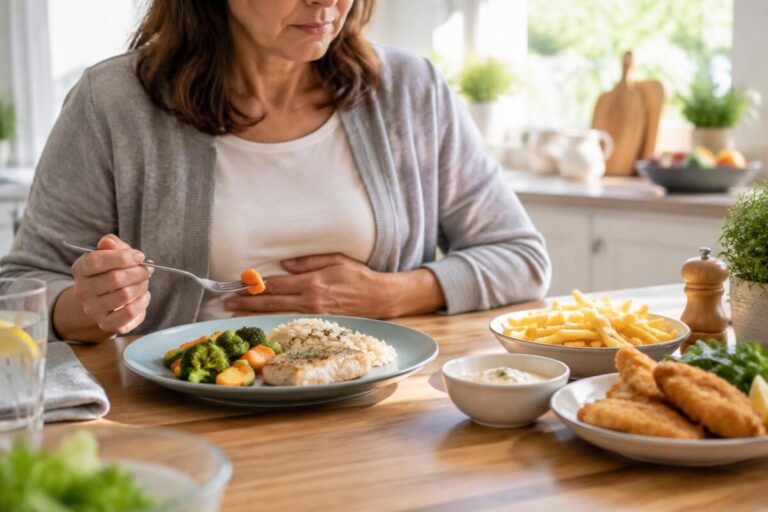
Imagine Samira, who has known diverticulosis and feels well. She has no reason to automatically cut out fruit, vegetables, or whole grains: she can choose a suitable, varied diet and make changes gradually, taking her tolerance into account.
If she develops significant abdominal pain, a fever, or nausea, the priority changes. A low-residue diet should not replace a medical consultation, because only a healthcare professional can assess the cause of the symptoms and decide on appropriate care.
Three steps to adjust your diet
- Assess the situation. If you have new symptoms, seek medical advice rather than changing your diet on your own. Severe pain, fever, vomiting, or rapid worsening warrant urgent assessment.
- Follow the instructions you receive. If a healthcare professional recommends a temporary low-residue diet, ask which foods to choose, how long to follow it, and what signs should prompt you to contact them again.
- Gradually return to a varied diet. When the flare improves and your care team confirms it is appropriate, increase fiber in stages. This helps you monitor your tolerance and support bowel movements.
Preventing recurrences relies on appropriate follow-up and sustainable habits, not on permanent restrictions chosen at random. A balanced diet, regular physical activity, and good hydration can contribute to overall well-being; however, advice should be tailored to you.
Frequently asked questions about diverticulitis and fiber
Should you eliminate fiber during diverticulitis?
Not systematically. During a flare, a healthcare professional may temporarily recommend a low-residue diet, depending on the symptoms and how they progress. Don’t start this diet without medical advice.
Can you eat nuts or seeds if you have diverticulosis?
It is generally not necessary to automatically eliminate them. If a food bothers you, note your reaction and ask a healthcare professional for advice.
When should you reintroduce fiber after a flare?
Resuming fiber depends on how the episode progresses and on medical instructions. When it is approved, fiber is generally reintroduced gradually, while monitoring your tolerance.
Which symptoms require prompt medical attention?
Severe or worsening abdominal pain, fever, vomiting, or a deteriorating general condition require prompt medical assessment.
I hope you found these tips helpful. See you soon! — Angelika