Natural Remedies: Varicose Veins, 6 Daily Habits That Really Change How They Feel
Hi, it’s Angelica. To relieve heavy legs, try six simple habits: walk, work your calf muscles, elevate your legs, choose a cool shower, drink plenty of fluids, and eat a balanced diet.
Natural remedies can improve venous comfort and how your legs feel day to day, but they won’t make established varicose veins disappear. Consistency matters more than a complicated routine: start with one easy step, then add the others at your own pace.
Things you can do right now:
- Walk at a moderate pace for about 30 minutes, depending on your fitness and circumstances.
- If you sit for a long time, get up and do a few calf exercises every hour.
- Elevate your legs for 15 to 20 minutes while resting.
- Finish your shower with a cool spray on your legs, moving upward from your ankles to your knees.
- Drink regularly and limit very salty foods if your ankles swell.
To complement these steps, you can read these tips on a natural leg-care routine and this page about pain related to varicose veins.
Six daily habits to relieve varicose veins
The veins in your legs have to carry blood back to your heart, sometimes against gravity. When this return flow is less efficient, you may feel heaviness or swelling, especially after a long day spent sitting or standing still.
These habits support blood circulation, but they don’t replace medical advice. A gradual, consistent change is often easier to maintain than a major routine followed for only a few days.
1. Walk a little every day
With each step, your calf muscles contract and help move blood upward. Walking every day is therefore an accessible option: aim for about 30 minutes, or break this time into several walks to fit your schedule.
Swimming and cycling also work your legs while keeping impact low. If you’re just starting out or your pain increases during exercise, slow down and ask a healthcare professional for advice.
2. Work your calf muscles during breaks
When you have to sit or stand for a long time, a few ankle movements can break up periods of inactivity. Slowly rise onto your toes, lower your heels, then repeat several times without straining.
A simple anecdote: after spending her days on her feet at the bookstore, Claire made a habit of doing these movements during a short break. She mainly noticed that her legs felt less tense at the end of the day.
3. Elevate your legs
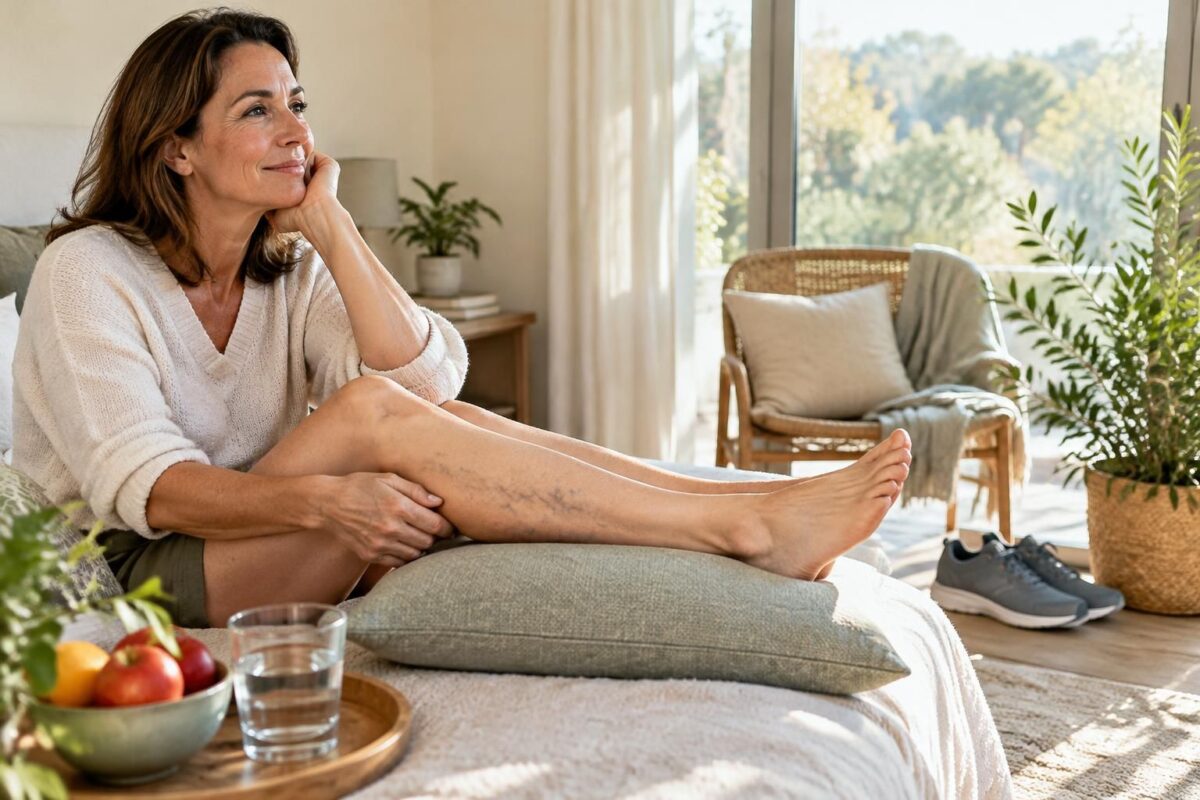
While lying down, place your legs on a cushion so they’re slightly above heart level, if this position feels comfortable. Elevating your legs for 15 to 20 minutes at the end of the day may help ease the feeling of heaviness.
This is a simple step, but it shouldn’t delay a medical consultation if swelling appears suddenly or gets worse. Comfort is a useful guide, not a diagnosis.
4. Finish your shower with a cool spray
A spray of cool water on your calves, moving from your ankles to your knees, often feels pleasant. There’s no need to use ice-cold water: a few minutes at a comfortable temperature is enough, and you can stop if it becomes unpleasant.
Prolonged exposure to heat can increase discomfort for some people. If you notice this effect, choose lightweight clothing and avoid very hot conditions that bother you.
5. Choose a balanced diet and stay well hydrated
A balanced diet can include berries, citrus fruits, grapes, vegetables, and fiber-rich foods. Flavonoids found in some plants support healthy blood vessels, while vitamin C contributes to collagen formation.
Staying hydrated and consuming salt in moderation can also support your overall well-being. About 1.5 liters of water a day is a common guideline, which you can adjust based on the weather, your activity, diet, and personal medical advice.
6. Use topical products gently
A cosmetic gel or cream can provide a cooling sensation, particularly if it contains menthol. Some products also contain plant extracts, such as horse chestnut; they can complement healthy habits, but won’t make enlarged veins disappear.
Apply the product according to its instructions, using gentle strokes from your ankles toward your knees. Avoid applying firm pressure directly to bulging varicose veins, and check the ingredients if you have sensitive skin or allergies.
Key takeaway: moving regularly, taking breaks, and adapting your care to how you feel are practical ways to support venous comfort.
A simple three-step routine
- Step 1: choose an easy movement, such as walking or doing a few ankle bends, and repeat it every day.
- Step 2: when sitting or standing for long periods, change position regularly and avoid keeping your legs crossed for too long.
- Step 3: in the evening, try elevating your legs and note whether the discomfort changes over the coming days.
If you have mild heaviness after a day spent sitting still, an active break and resting with your legs elevated may bring some comfort. If you have sharp pain and one leg suddenly becomes red, warm, or swollen, seek medical advice promptly.
When home remedies aren’t enough
Varicose veins may need to be assessed, especially if symptoms persist, worsen, or limit your activities. A healthcare professional can assess your situation and discuss medical compression or other suitable options if needed.
Seek medical attention promptly if you have unusual redness or warmth, sudden swelling, severe pain, bleeding, or a wound that is slow to heal. These signs warrant medical attention rather than self-massage or home treatment.
Practical everyday tips for your legs
| Habit | Simple guideline | What to watch for |
|---|---|---|
| Walking | About 30 minutes, or split into several walks | Adjust the effort to your fitness |
| Calf movements | A few repetitions during breaks | Don’t push yourself if the pain increases |
| Elevating your legs | 15 to 20 minutes while resting | Choose a comfortable position |
| Cool spray | A few minutes, moving upward | Stop if the cold feels unpleasant |
| Hydration and diet | Drink regularly and eat a varied diet | Adjust your intake to your circumstances |
“Consistency is better than intensity”: this principle helps you build realistic habits without expecting an immediate change in the appearance of your legs.
Frequently asked questions about natural remedies for varicose veins
Can daily habits make varicose veins disappear?
No. Walking, active breaks, and other natural remedies can improve comfort, but they generally won’t make veins that are already enlarged disappear.
How long should I walk to support circulation?
About 30 minutes at a moderate pace is a common guideline. You can split your walk into several sessions and adjust the duration to your fitness level.
Is massage recommended for legs with varicose veins?
Gentle stroking may feel pleasant, but avoid applying firm pressure directly to bulging varicose veins. Ask for advice if the area is painful or sensitive.
When should I seek medical advice?
See a healthcare professional if the pain persists or worsens, and seek prompt care if one leg suddenly becomes red, warm, or swollen, or if you have bleeding or a wound.
Today’s action: take a short walk and spend a few minutes elevating your legs this evening.
Thank you for your interest;Angelica